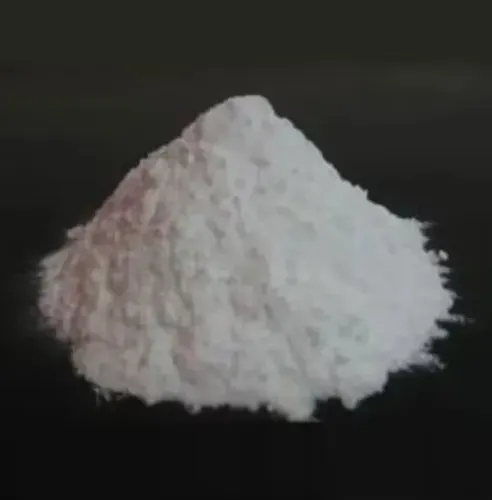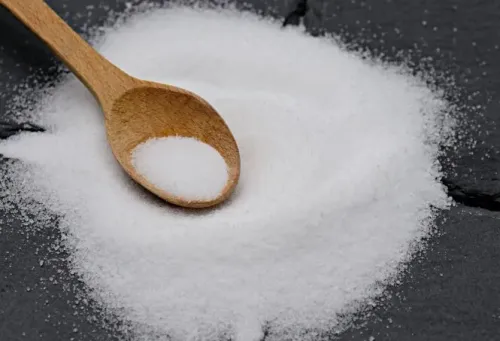
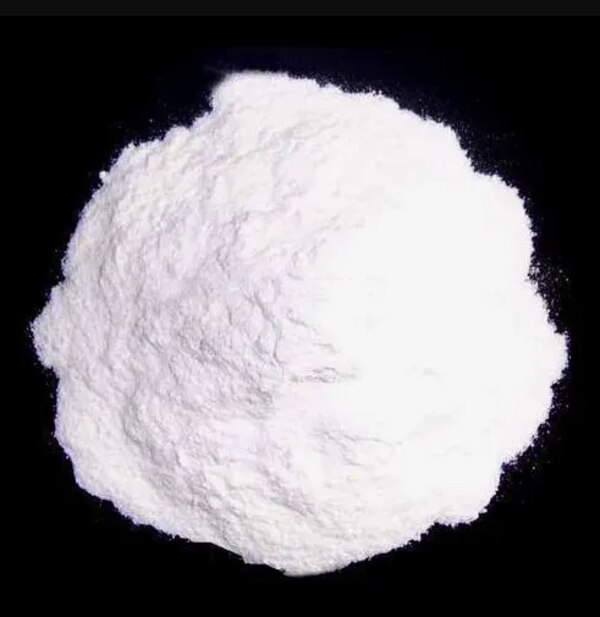
Calcium carbonate can be a calcium-delivering active ingredient, an antacid, or a functional tablet excipient, but those roles demand different specifications and performance evidence. By the end, you will know which dosage forms use it, how powder properties affect production, how to calculate elemental calcium, and what to verify before approving a pharmaceutical lot.
Key takeaways
- Separate active pharmaceutical ingredient and excipient specifications before purchasing.
- Compare particle size, bulk density and flow data before tablet trials.
- Match calcium carbonate grade to supplements, antacids and patient requirements.
- Request batch documents, testing records and supply controls from Vadodara suppliers.
Where calcium carbonate fits in pharmaceutical dosage forms
Calcium carbonate can be either the active pharmaceutical ingredient or an excipient, depending on the formulation. It is the active in antacids and calcium supplements; as an excipient, it serves as a diluent, mineral filler or pH-adjusting component. These calcium carbonate pharmaceutical uses require different specifications, so active-grade and excipient-grade material are not interchangeable.
| Dosage form | Role of calcium carbonate | Main formulation priority |
|---|---|---|
| Direct-compression tablet | Diluent or mineral filler; sometimes the active | Flow, die filling and compactibility |
| Chewable tablet | Antacid or calcium active, or chewable base excipient | Mouthfeel, density, compressibility and acceptable grittiness |
| Oral suspension | Suspended antacid or calcium active; sometimes a pH-adjusting excipient | Wetting, dispersion and dose uniformity |
| Powder | Calcium active, filler or mineral supplement | Flow and uniform dosing |
| Capsule | Calcium active or diluent | Powder flow, fill weight and dose uniformity |
A chewable base must compress into a strong tablet without becoming unpleasantly gritty, excessively dense or difficult to break down in the mouth. A powder or capsule formulation places greater emphasis on consistent flow and accurate filling than on mouthfeel.
For direct compression, calcium carbonate can supply bulk and support tablet formation, but poor flow or weak compaction creates weight variation, friability or capping. In suspensions, uneven settling can deliver different doses unless particle behaviour and redispersion are controlled.
How powder properties control blending, die filling and tablet quality
Fine calcium carbonate has greater reaction surface area, which can accelerate acid neutralisation and alter dissolution. It also produces dust, electrostatic charging and cohesive agglomerates that bridge in hoppers. Coarser particles usually flow better, but can feel gritty in chewable tablets and react more slowly in antacid testing.
Particle-size distribution matters as much as the median size. Broad distributions, irregular morphology and inconsistent bulk density or tapped density encourage segregation during transfer and blending. The result is blend non-uniformity, erratic die filling and tablet-weight variation.
Flowability affects how consistently powder reaches each die; compressibility and compactibility determine whether pressure produces a strong tablet rather than friability, lamination or capping.
GCC and PCC are different supply routes, not interchangeable grades.
| Route | Material structure | Process consequence |
|---|---|---|
| Ground calcium carbonate (GCC) | Milled natural mineral; shape and distribution depend on the source and milling | Often economical, but mineral variability, irregular particles and broader flow behaviour require qualification |
| Precipitated calcium carbonate (PCC) | Chemically precipitated; particle shape, surface area and density are engineered during precipitation | Can offer distinctive compaction and reaction behaviour, but requires control of precipitation and agglomeration |
Calcite, aragonite and vaterite can differ in density, surface area, dissolution and compaction. Add polymorph testing to process qualification when development data show sensitivity in tablet strength, die filling, dissolution or acid-neutralising kinetics; a generic identity test does not control these attributes. These relationships should guide calcium carbonate manufacturing applications, not price or whiteness alone.
How to choose calcium carbonate for supplements, antacids and patients
Calcium carbonate is the right active ingredient when you need a concentrated calcium source or an acid-neutralising API and the patient has adequate gastric acid. Pure calcium carbonate contains approximately 40.04% elemental calcium by mass, so 1,250 mg provides about 500 mg elemental calcium before assay adjustment or formulation losses.
Calculate the finished product from the supplier’s certified assay basis, never from gross powder weight alone.
| Option | Elemental calcium and absorption | Tablet, tolerability and patient fit |
|---|---|---|
| Calcium carbonate | Approximately 40.04%; absorption depends more on gastric acid | Smaller calcium dose by mass; suitable for patients with normal acid production, but can cause gas, bloating or constipation |
| Calcium citrate | Approximately 21%; less dependent on gastric acid for absorption | Larger tablets or more units; useful for low-acid patients, older adults and patients taking acid-suppressing medicines |
| Other calcium source | Concentration and solubility vary by salt | Select when aqueous solubility, tolerability or a specific route outweighs carbonate’s concentration |
In an antacid, calcium carbonate consumes acid and produces calcium ions, water and carbon dioxide. Acid-neutralising capacity therefore matters more than assay alone: check wetting, particle size, agglomeration, gastric conditions and dosage form.
Choose calcium citrate or another source when stomach acid is low, high aqueous solubility is required, or acidification and dissolution processing cannot tolerate carbon-dioxide release. Carbonate can also disrupt testing or processing through gas formation, while its reaction rate changes with particle size and surface area.
What to specify when buying pharmaceutical-grade material in Vadodara
Request a named compendium, not a generic “pharmaceutical grade” claim. Specify IP, USP–NF, BP or Ph. Eur., then define assay basis, particle-size distribution, loss on drying, elemental-impurity limits, microbial requirements and packaging.
Industrial, food or high-purity calcium carbonate is not automatically suitable for a drug product because its controls, impurity profile and intended use may differ.
Ask the calcium carbonate supplier in Vadodara for each incoming lot:
- Identity, assay and assay basis
- Particle-size distribution, moisture or loss on drying, and insoluble matter
- Lot-specific lead, arsenic, cadmium, mercury, nickel and chromium results, or a documented risk assessment
- Microbial results where the dosage form and route require them
- Manufacturing date, retest or expiry status, and container-integrity confirmation
Qualification must examine mineral-source traceability, GMP controls, validated cleaning and segregation, foreign-matter controls, calibrated testing, batch traceability, change notification, complaint handling and supply continuity. Assess Halogens, or any Vadodara manufacturer, processor or supplier, on those records and control systems rather than delivery distance or price.
For calcium carbonate pharmaceutical grade India, destination-market requirements govern export documentation and testing. A batch meeting IP may still need USP–NF or Ph. Eur. evidence, different impurity limits or additional testing for the registered market. Recheck the certificate against the physical lot; it is not a permanent declaration for later deliveries.
Related product
 | Pharmaceutical Grade : IP/BP/EP/USP Synonyms: Carbonic acid calcium salt; calcite; aragonite; limestone CAS No.: 471-34-1 Molecular Weight: 100.09 Chemical Formula:... View product → |
How to qualify compatibility, incoming quality and ongoing supply
A clear powder blend can still produce a failed batch. Acidic excipients or granulation liquids consume carbonate and release carbon dioxide; calcium carbonate can also shift microenvironmental pH, interact with, or adsorb other ingredients.
1. Run compatibility studies through blending, granulation-liquid exposure, compression, coating, dissolution and container stability. Record gas evolution, blend uniformity, tablet defects, coating changes, dissolution shifts and assay loss; a short visual mixture check cannot reveal these failures.
2. Test each incoming lot against its certificate of analysis. Confirm identity, assay, particle-size distribution, drying loss or moisture, insoluble matter, elemental impurities, applicable microbial results, manufacturing date, retest or expiry status and container integrity. Review mineral-source traceability, batch records and the supplier’s change-notification commitment.
3. For an antacid API, request the supplier’s acid-neutralising-capacity method and acceptance criteria. Equal calcium carbonate assay does not guarantee equal reaction kinetics because surface area, agglomeration and particle-size distribution affect acid consumption.
4. Set microbiological controls for the dosage form and route. Low water activity does not make an inorganic powder sterile; oral, mucosal and inhalation products require different risk assessments, sampling plans and limits.
5. Requalify after changes to mineral source, milling or precipitation process, manufacturing site, packaging or test method. Recheck validation when equipment, cleaning controls or particle-size measurement changes.
These controls define dependable calcium carbonate pharmaceutical manufacturing in Vadodara and export-oriented Gujarat production. Local availability helps, but the receiving market’s compendial and regulatory standard decides acceptability.
Frequently asked questions
Where is calcium carbonate used in pharmaceutical dosage forms?
Calcium carbonate is used as the active ingredient in antacids and calcium supplements, and as a diluent, mineral filler or pH-adjusting excipient.
Which powder properties affect calcium carbonate tablet quality?
Particle size, particle-size distribution, bulk density, tapped density, flowability, moisture and compressibility affect blending, die filling and tablet consistency.
How do you choose calcium carbonate for supplements and antacids?
Match the grade to elemental calcium content, dose size, particle characteristics, impurity limits, taste, dissolution behaviour and patient needs.
What should buyers specify when sourcing pharmaceutical-grade calcium carbonate in Vadodara?
Specify grade, assay, elemental calcium content, particle-size limits, moisture, heavy metals, microbiological limits, packaging, quantity and required batch documents.
How should a pharmaceutical manufacturer qualify a calcium carbonate supplier?
Review samples, certificates of analysis, test methods, manufacturing controls, traceability, change notification, audit evidence and consistency across supplied batches.
Keywords